There will definitely be better and more comprehensive reports on this past weekend’s L.A. Times Festival of Books at UCLA. I know Naomi Hirahara over on Murderati will probably have a great wrap up later in the week. So I’ll just give a few impressions.
Any writer, either publisher or with the dream of being published (or even if you don’t have that dream), should go to this festival at least once in their life. To see so many readers in the same place at the same time…amazing.
I arrived early on Saturday, around 10:30. As I was by Royce Hall toward the exhibition booths, there was a long line wrapped around the building. This, I found out soon after, was the line for people with tickets to see Frank McCourt speak. As I neared the booths, I came upon a second line, and overheard people saying that it was the stand-by line for the same event. This stand-by line was already over two hundred people long and growing. Royce Hall holds, I believe around 1500 or so. Everyone was so excited to hear an author speak. That was my first impression.
Hundred of booths: booksellers, publishers both large and small, media outlets, author associations, ancillary items (like the portable bed desk). Everything book you could think of. That was impression number two.
As noon approached, the crowds grew larger. It felt almost like going to Disneyland on a busy day – not quite the size of Disneyland but the bodies per square foot were similar. Number three.
And finally – authors, authors everywhere. In panels, at booths and just walking around. Many of the book stores such as L.A.’s own Mystery Bookstore, had multiple authors signing in shifts throughout the day. Number four.
The Mystery Bookstore had anywhere from six to eight authors at all times. I ran into my friend Nathan Walpow there. I met Alexandra Sokoloff there, she and I will be on the same panel at ThrillerFest this summer. I had a great conversation with Jeff Shelby author of Killer Swell and one of the bloggers at First Offenders. Recognized him from his picture and talked to him before he started signing. At other booths I talked to two of the seven members of Murderati: Pari Noskin Taichert at the Sisters in Crime booth and Naomi Hirahara at the Kinokunya Books booth. And I saw so many others.
The one person I was hoping to run into but did not was Sean Doolittle. Sean and I are both former Ugly Town authors now at Bantam Dell. We’ve met before, but I was not able to make it to his signing time at Mystery Bookstore.
The sun was out, the crowd was buoyant and setting was wonderful. It was a celebration of books. What could be better than that?

Sunday, April 30, 2006

Friday, April 28, 2006
It's Here
Today's the day. The L.A. Times Festival of Books begins at 10 a.m. My backpack has the water and the snacks and a bit of room for...I don't know...BOOKS! I'll be arriving around noon and spending most of the afternoon there. Can not wait!
Full report in the near future.
Full report in the near future.
Tangent
Okay, riffing a little off of yesterday’s post, let’s focus in on the R of ROWE (or I guess I could have called it WORE or even OREW…but OREW doesn’t make sense. Focus, Brett, focus.)
I wrote yesterday about how important reading is to the education of a writer, and how it begins with the first time we picked up a book.
So what I wanted to discuss today is early writing influences. I’ll list a few of mine, but I’d love to hear yours, too.
Here are mine in no particular order:
1. The Alfred Hitchcock and the Three Investigator books. I did a whole post about this a month or two ago, so I won’t go into any further here. Except to say I loved these books when I was a kid.
2. Anything by Alistar MacLean. I must have read a dozen books he wrote when I was still young…Ice Station Zebra, Where Eagles Dare, The Guns of Navarone, and The Golden Rendevous just to name some. These were truly the foundation of my love for thrillers.
3. The Eagle Has Landed by Jack Higgins. Wow.
4. Black Sunday by Thomas Harris – so much better than the film.
A break here for a moment. Obviously, my parents instilled in me a love of reading. But it was my Dad’s choice of genre that influenced me the most back then. He was and still is a huge science fiction fan. Being a physicist (now retired), I guess this stands to reason. So the following influences have a decidedly Sci-Fi base:
5. Robert Heinlein. He is first and foremost. I read everything I could of his. Stranger in a Strange Land, Farhams Freehold, Citizen of the Galaxy…the list is long.
6. Arthur C. Clarke. Of course.
7. Isaac Asimov. The Foundation books I read many times.
8. James White. A lot of people probably haven’t heard of him. He wrote a series of space medical dramas call, I think, Sector General. But those weren’t the books of his I read. It was his stand alones like All Judgment Fled (which I’ve read at least fifteen times), The Watch Below and The Dream Millennium that I love.
There are definitely more authors I could name. As I got older, Robert Ludlum, Michael Crichton, Dean Koontz, Stephen King… And of course the list continues to grow.
If you’d like to share, tell me some of your early influences. I promise not to use the information against you…unless I really, really have to.
I wrote yesterday about how important reading is to the education of a writer, and how it begins with the first time we picked up a book.
So what I wanted to discuss today is early writing influences. I’ll list a few of mine, but I’d love to hear yours, too.
Here are mine in no particular order:
1. The Alfred Hitchcock and the Three Investigator books. I did a whole post about this a month or two ago, so I won’t go into any further here. Except to say I loved these books when I was a kid.
2. Anything by Alistar MacLean. I must have read a dozen books he wrote when I was still young…Ice Station Zebra, Where Eagles Dare, The Guns of Navarone, and The Golden Rendevous just to name some. These were truly the foundation of my love for thrillers.
3. The Eagle Has Landed by Jack Higgins. Wow.
4. Black Sunday by Thomas Harris – so much better than the film.
A break here for a moment. Obviously, my parents instilled in me a love of reading. But it was my Dad’s choice of genre that influenced me the most back then. He was and still is a huge science fiction fan. Being a physicist (now retired), I guess this stands to reason. So the following influences have a decidedly Sci-Fi base:
5. Robert Heinlein. He is first and foremost. I read everything I could of his. Stranger in a Strange Land, Farhams Freehold, Citizen of the Galaxy…the list is long.
6. Arthur C. Clarke. Of course.
7. Isaac Asimov. The Foundation books I read many times.
8. James White. A lot of people probably haven’t heard of him. He wrote a series of space medical dramas call, I think, Sector General. But those weren’t the books of his I read. It was his stand alones like All Judgment Fled (which I’ve read at least fifteen times), The Watch Below and The Dream Millennium that I love.
There are definitely more authors I could name. As I got older, Robert Ludlum, Michael Crichton, Dean Koontz, Stephen King… And of course the list continues to grow.
If you’d like to share, tell me some of your early influences. I promise not to use the information against you…unless I really, really have to.
Thursday, April 27, 2006
ROWE
No, this is not some sort of politic rant. I’m simply talking about ROWE. It’s something every writer must adhere to if they expect to create good work. What is ROWE, you ask?
R –> Read
O –> Observe
W –> Write
E –> Experience
If you think about it, it’s pretty obvious. I’m sure most authors do all of the above without even realizing it.
The first teachers we have as writers, the first who really begin to shape our skills, are the authors we read when we are young. We didn’t even know we were in training then. But the way sentences were crafted, the way dialogue was presented, even the subconscious realization of point of view, all were seeded in us beginning with that first book we read.
But the learning process doesn’t stop there. The best writers continue to read everything they can. Learning, soaking it in, and just enjoying. Each book is like a classroom. Even the bad ones (perhaps even more so than the good.) We learn what to do and what not to do. What sounds right and what sounds forced. We learn that sure, sometime you can get away with short cuts, but we also learn that when short cuts aren’t taken how much better a story can be.
It has happened often, but it always surprises me when I hear of a writer who doesn’t read much. Mostly, this has been people I’ve met in old writing groups. And when I read their submissions, more times than not, what’s on the page is not very good.
We stand on the foundation of those who have gone before us. To ignore that is just stupid.
Reading is probably our most important tool, but it is not the only one. Good writers are able to see what others do not see. We observe life. We watch the interactions of strangers. We sit in a coffee shop and try to guess at the lives of those around us. When we walk into a room, we not only see the person waiting there for us, but we also see the couch that’s slightly askew, the stack of comedy DVDs next to the television, the dying flowers in the vase across the room. We may smell the chicken baking in the kitchen, or the scent of rain that has followed us in from outside.
We see place. We see character. We see life in levels others don’t even care about. This is what we do. This helps to make us better story tellers.
Hand in hand with observation comes experience. You can’t always do everything your characters need to do. But you can do things that will help you understand them better. If your main character is a risk taker, then jump out of a plane or take hang gliding lessons or just drive on the freeway for an hour. If she or he loves to travel, then travel. If your character shoots a gun, go to a range and take a handgun lesson. Know what these things feels like.
Drink the wine that they drink. Watch the movies that they would watch. Go to the places they would go. Experience your own life then use that in what you write.
And that’s the final thing for every writer. We must write. Every damn day. Even if it is just a paragraph that you toss in the trash as soon as you are done. WRITE. WRITE. WRITE. There is no excuse not to.
R –> Read
O –> Observe
W –> Write
E –> Experience
If you think about it, it’s pretty obvious. I’m sure most authors do all of the above without even realizing it.
The first teachers we have as writers, the first who really begin to shape our skills, are the authors we read when we are young. We didn’t even know we were in training then. But the way sentences were crafted, the way dialogue was presented, even the subconscious realization of point of view, all were seeded in us beginning with that first book we read.
But the learning process doesn’t stop there. The best writers continue to read everything they can. Learning, soaking it in, and just enjoying. Each book is like a classroom. Even the bad ones (perhaps even more so than the good.) We learn what to do and what not to do. What sounds right and what sounds forced. We learn that sure, sometime you can get away with short cuts, but we also learn that when short cuts aren’t taken how much better a story can be.
It has happened often, but it always surprises me when I hear of a writer who doesn’t read much. Mostly, this has been people I’ve met in old writing groups. And when I read their submissions, more times than not, what’s on the page is not very good.
We stand on the foundation of those who have gone before us. To ignore that is just stupid.
Reading is probably our most important tool, but it is not the only one. Good writers are able to see what others do not see. We observe life. We watch the interactions of strangers. We sit in a coffee shop and try to guess at the lives of those around us. When we walk into a room, we not only see the person waiting there for us, but we also see the couch that’s slightly askew, the stack of comedy DVDs next to the television, the dying flowers in the vase across the room. We may smell the chicken baking in the kitchen, or the scent of rain that has followed us in from outside.
We see place. We see character. We see life in levels others don’t even care about. This is what we do. This helps to make us better story tellers.
Hand in hand with observation comes experience. You can’t always do everything your characters need to do. But you can do things that will help you understand them better. If your main character is a risk taker, then jump out of a plane or take hang gliding lessons or just drive on the freeway for an hour. If she or he loves to travel, then travel. If your character shoots a gun, go to a range and take a handgun lesson. Know what these things feels like.
Drink the wine that they drink. Watch the movies that they would watch. Go to the places they would go. Experience your own life then use that in what you write.
And that’s the final thing for every writer. We must write. Every damn day. Even if it is just a paragraph that you toss in the trash as soon as you are done. WRITE. WRITE. WRITE. There is no excuse not to.
Monday, April 24, 2006
Talk About a Fun Read
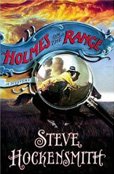
I just finished Steven Hockensmith's debut novel Holmes on the Range. Westerns are not something I usually pick up. Nor are Sherlock Holmes related stories. But I have to say, this book is fantastic. So much fun! I laughed a lot. And each evening I couldn't wait until it was time to pick up where I left off.
I'm not going to give you a summary. I suck at summaries, besides I'm constantly afraid of giving away too much. But picture this: It's the 1890s and two brothers (Old Red and Big Red) move from ranch to ranch looking for work. Old Red just happens to be a huge Sherlock Holmes fan, and when a crime is committed he just can't help trying a little detectifying himself.
Usually I'm emmersed in fast paced thrillers and super serious crime stories, so this was a great change of pace. But don't get me wrong, it's not just a "palette cleanser." It's good. Really good. Steven Hockensmith really knows what he's doing. I can't wait for Old Red and Big Red's next adventure.
You'd do yourself a big favor by picking this one up.
Sunday, April 23, 2006
Getting to Know You (Actually not You, but...well...just read on)
One of the most valuable writing classes I took in college wasn’t a writing class at all. It was Acting 101. The fact that I took an acting class isn’t as big of a stretch as you might think. I’d actually done a bit of acting in high school. But just to be clear, I was under no delusion that I would be pursuing acting as a career…I was a little too realistic (not to mention introverted) for that. I was merely filing out my electives with something I thought would be fun.
Okay, back to the class. I had this great teacher. For the life of me, I can’t remember her name. Don’t give me a hard time! It was…eh…a few…okay…several years ago. (Let’s just call her Ms. Brando.) She was really good at pulling out the best performances possible from everyone in the class. I enjoyed that a lot. But that’s not what made this the best writing class I had.
Each week, Ms. Brando would assign us a scene to do. Sometimes it was with someone else, sometimes it was a monologue. But part of what she had us do to get into the character was write an essay about the part we were playing.
I think most people did your basic character sketches. You know what I mean. Age. Physical characteristics. A few highlights of their life…but probably only those facts that were revealed in the play itself.
I guess because I considered myself more a writer than an actor, I really dug into the essays. I would write stories, usually in first person as the character, telling about “my” life or concentrating on a specific episode.
I do remember one specific paper I wrote. I’d been assigned to play the part of George Gibbs from Thorton Wilder’s Our Town.If any of you know the play, you’ll remember that George was the main character who goes from being a teenager in love in the first act to being a late twenty something widower when his high-school sweetheart dies in childbirth.
Instead of writing my essay in first person, I decided to treat this one as a newspaper interview. I (Brett) was a reporter and I met up with George in a local coffee shop several years after the timeline of the play was over. I asked him questions, and he answered as best he could, dodging some answers and struggling with others. I didn’t put words into his mouth. I wrote them down exactly as he said them to me in my mind.
Ms. Brando loved the paper. I think she was probably just happy not to get another “George had a hard life…” type submission. In the end it doesn’t really matter what she thought. (But if you’re wondering, I did get an A.) What does matter is all the papers I wrote for that class (and specifically the one about George Gibbs) were a revelation to me. They did exactly what Ms. Brando had intended. They helped me to get to know a character. Of course she was thinking in the acting sense. To me it was all about how it related to writing.
I knew the method would help me get to know characters I created in my stories. And what that interview showed me was that I could actually talk directly to my characters. I could ask them questions I didn’t know the answers to, and you know what? They’d answer me.
Some of you might have read my post from Friday night – it follows this one, so just keep scrolling down if you haven’t. It’s kind of an example of what I’m talking about. Not 100%, but you’ll get the idea. In this case, that particular post was not something I wrote long ago to help me with my novel. I wrote it Friday night because I wanted to find some way to introduce people to the protagonist of my novel, and it felt like a good way to do it.
I guess all I’m saying is that if you’re a writer, don’t be afraid to talk to your characters. They like to talk, though you might have to work a bit to get them to fully open up.
But you’re a writer. This kind of work’s okay.
Okay, back to the class. I had this great teacher. For the life of me, I can’t remember her name. Don’t give me a hard time! It was…eh…a few…okay…several years ago. (Let’s just call her Ms. Brando.) She was really good at pulling out the best performances possible from everyone in the class. I enjoyed that a lot. But that’s not what made this the best writing class I had.
Each week, Ms. Brando would assign us a scene to do. Sometimes it was with someone else, sometimes it was a monologue. But part of what she had us do to get into the character was write an essay about the part we were playing.
I think most people did your basic character sketches. You know what I mean. Age. Physical characteristics. A few highlights of their life…but probably only those facts that were revealed in the play itself.
I guess because I considered myself more a writer than an actor, I really dug into the essays. I would write stories, usually in first person as the character, telling about “my” life or concentrating on a specific episode.
I do remember one specific paper I wrote. I’d been assigned to play the part of George Gibbs from Thorton Wilder’s Our Town.If any of you know the play, you’ll remember that George was the main character who goes from being a teenager in love in the first act to being a late twenty something widower when his high-school sweetheart dies in childbirth.
Instead of writing my essay in first person, I decided to treat this one as a newspaper interview. I (Brett) was a reporter and I met up with George in a local coffee shop several years after the timeline of the play was over. I asked him questions, and he answered as best he could, dodging some answers and struggling with others. I didn’t put words into his mouth. I wrote them down exactly as he said them to me in my mind.
Ms. Brando loved the paper. I think she was probably just happy not to get another “George had a hard life…” type submission. In the end it doesn’t really matter what she thought. (But if you’re wondering, I did get an A.) What does matter is all the papers I wrote for that class (and specifically the one about George Gibbs) were a revelation to me. They did exactly what Ms. Brando had intended. They helped me to get to know a character. Of course she was thinking in the acting sense. To me it was all about how it related to writing.
I knew the method would help me get to know characters I created in my stories. And what that interview showed me was that I could actually talk directly to my characters. I could ask them questions I didn’t know the answers to, and you know what? They’d answer me.
Some of you might have read my post from Friday night – it follows this one, so just keep scrolling down if you haven’t. It’s kind of an example of what I’m talking about. Not 100%, but you’ll get the idea. In this case, that particular post was not something I wrote long ago to help me with my novel. I wrote it Friday night because I wanted to find some way to introduce people to the protagonist of my novel, and it felt like a good way to do it.
I guess all I’m saying is that if you’re a writer, don’t be afraid to talk to your characters. They like to talk, though you might have to work a bit to get them to fully open up.
But you’re a writer. This kind of work’s okay.
Friday, April 21, 2006
Conversations with Jonathan Quinn
“I make things disappear,” Jonathan Quinn said.
I think we’d known each other about six months at that point. We’d met in Germany when I was working there on a project for a visitor center presentation that would live at a new Volkswagen plant in Dresden. The job itself wasn’t in Dresden, though. It was in Berlin, a town Quinn knows well.
I thought at the time he was just another one of the wanderers I tend to collect, this one a fellow American working overseas. I think I first met him on the U-bahn (the Berlin train system) heading across town from the Mitte toward Ku’damm. I’m not 100% on that, though. The genesis of a character is often a drawn out process, and my memory of Quinn’s birth is murky.
By the time this particular conversation happened, we were both back in Los Angeles, where, it turns out, we both lived – Quinn much more comfortably than I. We were having dinner at a Thai restaurant on Sunset Boulevard in Hollywood. At the time it was my favorite place to eat. In the past year and a half, they've changed the decor to some sort of 90s disco theme and I haven't gone back.
“What does that mean?” I asked.
As he took a sip of his Singha beer, I thought maybe he was just going to leave it at that. After all, this was the most I’d ever got out of him about what he did for a living. But then he said, “Sometimes things don’t go as planned. When that happens I’m the one who makes it all look pretty again.”
“Tell me about Berlin,” I said. I had sensed from the beginning that something had happened there, something I wanted to know about.
“Nothing to tell.” He didn’t even try to hide the fact that he was lying.
That’s about as far as I got that night. What exactly the ‘things’ were that didn’t go as planned, I wasn’t completely sure, but I did have my ideas.
I could have just let him die right then. He was forcing me to work pretty hard to get to know him. I’d dismissed more talkative characters sooner than this. But there was something about him, something that made me want to know more. He was interesting and mysterious. And I’d be damned if there wasn’t something that had happened in Berlin I wanted to hear about.
A week later as we rode in my car, I said, “You’re not killing people, but you do deal with the dead, right?”
“You’re talking in black and whites. You, as much as anyone, know the world is made up of grays.”
This answer stung me a little bit. He was right. One of my biggest pet peeves is people who only think in black and white, yet here I was trying to put him in a neat little black and white box.
“Let’s just say I don’t kill if I don’t have to,” he went on. “But you’re right about dealing with the dead. It’s a big part of what I do.”
“You dispose of them?”
“Exactly.” He smiled as if I was a student and he was a proud teacher. “Disposal is one of the services I provide.”
“How does that work?”
“That I’m not going to tell you.”
“But you will eventually.”
“Eventually.”
“These other things you do, what are they?”
He looked out the window into the L.A. night. “I think that was your exit,” he said.
He was right.
I moved over to the right lane, so I could get off at the next ramp and double back.
“Just getting rid of a body isn’t enough. You’ve got to make it look like whatever went wrong never happened. Blood, fingerprints, spent shells, things out of place. These are all problems I have to deal with.”
“I can’t imagine you went to school for this. How did you get in and learn about the business?”
“I was recruited.”
“Out of college?”
He shook his head. “I was a cop.”
For some reason, that surprised me. “Who recruited you?”
“Doesn’t matter. He’s dead now.”
“Did he teach you a lot?”
“Everything.”
As I eased my car off the freeway, I decided to press my luck. “And Berlin?”
I was greeted with only silence. When I looked over at the passenger seat, Quinn was gone.
As time passed, bits of his story started coming to me. Not from anything Quinn said, but somehow I was sensing it, I guess. Even when he wasn’t around, I’d pick up on things. I would be at work or getting into bed or even watching TV and a name or a place or a situation would pop into my mind. Immediately I’d know it was part of Quinn’s story. Still, the problem was I had a lot of parts, but I didn’t have the whole.
The only way I was going to get that was to have Quinn tell it to me himself.
“Tell me about Orlando,” I said one morning.
“Leave her out of it.”
“Then let’s talk about Berlin.”
“Let’s not.”
The next day: “Is she a friend?”
“You don’t listen very well, do you?”
“No.”
“She’s a friend.” I could tell he was holding something back.
“Was she with you in Berlin?”
If she was, he didn’t hang around to tell me.
Each day I kept pressing, harder and harder, using the bit of information that had seeped into my mind.
“What did you learn about the fire in Colorado?” I would ask. “How long did you work for Peter?” “Why do you hate the cold?”
And finally, “Tell me what happened in Berlin.”
Finally one afternoon, he looked at me for a good long time before answering. “Okay,” he said. “If you think you’re ready.”
“I’m ready.”
“You’d better write this down.”
So I did.
I think we’d known each other about six months at that point. We’d met in Germany when I was working there on a project for a visitor center presentation that would live at a new Volkswagen plant in Dresden. The job itself wasn’t in Dresden, though. It was in Berlin, a town Quinn knows well.
I thought at the time he was just another one of the wanderers I tend to collect, this one a fellow American working overseas. I think I first met him on the U-bahn (the Berlin train system) heading across town from the Mitte toward Ku’damm. I’m not 100% on that, though. The genesis of a character is often a drawn out process, and my memory of Quinn’s birth is murky.
By the time this particular conversation happened, we were both back in Los Angeles, where, it turns out, we both lived – Quinn much more comfortably than I. We were having dinner at a Thai restaurant on Sunset Boulevard in Hollywood. At the time it was my favorite place to eat. In the past year and a half, they've changed the decor to some sort of 90s disco theme and I haven't gone back.
“What does that mean?” I asked.
As he took a sip of his Singha beer, I thought maybe he was just going to leave it at that. After all, this was the most I’d ever got out of him about what he did for a living. But then he said, “Sometimes things don’t go as planned. When that happens I’m the one who makes it all look pretty again.”
“Tell me about Berlin,” I said. I had sensed from the beginning that something had happened there, something I wanted to know about.
“Nothing to tell.” He didn’t even try to hide the fact that he was lying.
That’s about as far as I got that night. What exactly the ‘things’ were that didn’t go as planned, I wasn’t completely sure, but I did have my ideas.
I could have just let him die right then. He was forcing me to work pretty hard to get to know him. I’d dismissed more talkative characters sooner than this. But there was something about him, something that made me want to know more. He was interesting and mysterious. And I’d be damned if there wasn’t something that had happened in Berlin I wanted to hear about.
A week later as we rode in my car, I said, “You’re not killing people, but you do deal with the dead, right?”
“You’re talking in black and whites. You, as much as anyone, know the world is made up of grays.”
This answer stung me a little bit. He was right. One of my biggest pet peeves is people who only think in black and white, yet here I was trying to put him in a neat little black and white box.
“Let’s just say I don’t kill if I don’t have to,” he went on. “But you’re right about dealing with the dead. It’s a big part of what I do.”
“You dispose of them?”
“Exactly.” He smiled as if I was a student and he was a proud teacher. “Disposal is one of the services I provide.”
“How does that work?”
“That I’m not going to tell you.”
“But you will eventually.”
“Eventually.”
“These other things you do, what are they?”
He looked out the window into the L.A. night. “I think that was your exit,” he said.
He was right.
I moved over to the right lane, so I could get off at the next ramp and double back.
“Just getting rid of a body isn’t enough. You’ve got to make it look like whatever went wrong never happened. Blood, fingerprints, spent shells, things out of place. These are all problems I have to deal with.”
“I can’t imagine you went to school for this. How did you get in and learn about the business?”
“I was recruited.”
“Out of college?”
He shook his head. “I was a cop.”
For some reason, that surprised me. “Who recruited you?”
“Doesn’t matter. He’s dead now.”
“Did he teach you a lot?”
“Everything.”
As I eased my car off the freeway, I decided to press my luck. “And Berlin?”
I was greeted with only silence. When I looked over at the passenger seat, Quinn was gone.
As time passed, bits of his story started coming to me. Not from anything Quinn said, but somehow I was sensing it, I guess. Even when he wasn’t around, I’d pick up on things. I would be at work or getting into bed or even watching TV and a name or a place or a situation would pop into my mind. Immediately I’d know it was part of Quinn’s story. Still, the problem was I had a lot of parts, but I didn’t have the whole.
The only way I was going to get that was to have Quinn tell it to me himself.
“Tell me about Orlando,” I said one morning.
“Leave her out of it.”
“Then let’s talk about Berlin.”
“Let’s not.”
The next day: “Is she a friend?”
“You don’t listen very well, do you?”
“No.”
“She’s a friend.” I could tell he was holding something back.
“Was she with you in Berlin?”
If she was, he didn’t hang around to tell me.
Each day I kept pressing, harder and harder, using the bit of information that had seeped into my mind.
“What did you learn about the fire in Colorado?” I would ask. “How long did you work for Peter?” “Why do you hate the cold?”
And finally, “Tell me what happened in Berlin.”
Finally one afternoon, he looked at me for a good long time before answering. “Okay,” he said. “If you think you’re ready.”
“I’m ready.”
“You’d better write this down.”
So I did.
Monday, April 10, 2006
Something a Little Different
One of my favorite authors has started blogging. But unlike the rest of us, Barry Eisler’s The Heart of the Matter deals with “politics and language, particularly language as it influences politics, with the occasional post on some miscellaneous subject that catches my attention.”
A lawyer and former CIA operative among other things, Barry has the background to back it up. His blog should provide an interesting counterpoint to the other author blogs out there.
Love the title reference to one of my favorite books of all time, too. THE HEART OF THE MATTER by Graham Greene.
A lawyer and former CIA operative among other things, Barry has the background to back it up. His blog should provide an interesting counterpoint to the other author blogs out there.
Love the title reference to one of my favorite books of all time, too. THE HEART OF THE MATTER by Graham Greene.
Friday, April 07, 2006
Murderati
A great new blog started this week. Murderati is a collaborative effort between a group of writers including Naomi Hirahara, Simon Wood, JT Ellison, Elaine Flinn, Jeffrey Cohen, Pari Noskin Taichert, and Beatrice Brooks (aka Denise Dietz.) Definitely worth checking out. From the sound of things, it looks like they'll be having a lot of very helpful information.
Thursday, April 06, 2006
No Writer is an Island
That big shout of satisfaction you heard coming from the west coast last night was me. Sorry about that. Hope I didn't wake you. See, I got the latest draft of Hung Out to Die off to Bantam last night. It wasn't a particularly difficult rewrite, just took a few weeks.
There are few things as satisfying as seeing the notes my editor sent me get ticked off one-by-one until there was none left. As before, the notes were good ones. Really good. The story is that much better now...(when I say "that much," imagine me holding my hands far apart.)
It's a whole new world for me working with an editor. I’m fascinated by their profession. It’s not one I think I could ever do, at least not full time. But how cool is it that day in and day out these people help writers craft better stories. Sounds like a dream. At first, anyway. People come to you with interesting and exciting stories, and you help them make the tales better.
Well, there is a dark side. I'm sure there are those...hmmm...difficult writer's out there. You know what I’m talking about. The authors who don’t want to make any changes. Who think editors every suggestion is not worth his or her time.
Personally, I take the path of: "Thank you for offering to publish my book. What would you like me to do now?"
Wait, wait, wait, wait, wait. Quit yelling at me! I don't mean you just blindly do whatever your editor says. (Kindly extinguish the torches and let's save that hangman's knot for later...good craftsmanship on that, though.) But your editor is a story expert. Not to listen to them is stupid. You should talk to them. Ask them questions. Understand where they are coming from with their suggestions. 9.795 times out of 10, you’ll end up agreeing with them in the end.
Hung Out to Die is a good book. (I can say that now. None of you have read it yet.) Hell, it was a good book when Bantam bought it or they would have never given me the time of day based on my situation (read the early posts here about History...you might have to scroll down a bit.) Because of the suggestions my editor(s) have made, the story is better.
So much better (again with the hands held wide apart.)
“Sure, Brett. That’s all fine. But what if you aren’t published? What if you don’t have an editor?”
Simple. Find one. I did. I had a teacher who became my sounding board. He’d look at my work, give me ideas, help to fix problems. He even went so far as to often do a line edit. (Boy was that painful at first, but it sure helped prepare me for later.) So if you're unpublished and don't have an editor, I say find one. Not necessarily a professional, but someone. There are plenty of people out there, smart people, story people, people who can help you. Maybe it's a teacher, or a fellow writer. As long as it is someone you trust and whose opinions you respect, then you’re fine. Use them. Let them help you. Listen to them, and don't take criticism personally.
While writing might be an "individual" art, no book is ever written alone.
At least none that will ever be published.
There are few things as satisfying as seeing the notes my editor sent me get ticked off one-by-one until there was none left. As before, the notes were good ones. Really good. The story is that much better now...(when I say "that much," imagine me holding my hands far apart.)
It's a whole new world for me working with an editor. I’m fascinated by their profession. It’s not one I think I could ever do, at least not full time. But how cool is it that day in and day out these people help writers craft better stories. Sounds like a dream. At first, anyway. People come to you with interesting and exciting stories, and you help them make the tales better.
Well, there is a dark side. I'm sure there are those...hmmm...difficult writer's out there. You know what I’m talking about. The authors who don’t want to make any changes. Who think editors every suggestion is not worth his or her time.
Personally, I take the path of: "Thank you for offering to publish my book. What would you like me to do now?"
Wait, wait, wait, wait, wait. Quit yelling at me! I don't mean you just blindly do whatever your editor says. (Kindly extinguish the torches and let's save that hangman's knot for later...good craftsmanship on that, though.) But your editor is a story expert. Not to listen to them is stupid. You should talk to them. Ask them questions. Understand where they are coming from with their suggestions. 9.795 times out of 10, you’ll end up agreeing with them in the end.
Hung Out to Die is a good book. (I can say that now. None of you have read it yet.) Hell, it was a good book when Bantam bought it or they would have never given me the time of day based on my situation (read the early posts here about History...you might have to scroll down a bit.) Because of the suggestions my editor(s) have made, the story is better.
So much better (again with the hands held wide apart.)
“Sure, Brett. That’s all fine. But what if you aren’t published? What if you don’t have an editor?”
Simple. Find one. I did. I had a teacher who became my sounding board. He’d look at my work, give me ideas, help to fix problems. He even went so far as to often do a line edit. (Boy was that painful at first, but it sure helped prepare me for later.) So if you're unpublished and don't have an editor, I say find one. Not necessarily a professional, but someone. There are plenty of people out there, smart people, story people, people who can help you. Maybe it's a teacher, or a fellow writer. As long as it is someone you trust and whose opinions you respect, then you’re fine. Use them. Let them help you. Listen to them, and don't take criticism personally.
While writing might be an "individual" art, no book is ever written alone.
At least none that will ever be published.
Thursday, March 23, 2006
Editors and Agents
As you’ve probably gathered from past postings, the road I’ve traveled to have my first novel published is an unusual one. It’s not that I set out for it to happen that way, but since the path has gotten me where I have wanted to be, I have zero complaints.
It’s been over a year since Ugly Town bought my novel, and about four months since they had to suspend operations and transferred my contract to Bantam Dell. All of this happened without me having any representation.
Two things happened last week that were interesting twists to my journey. Maybe they’re only interesting to me. Who knows. Shannon, the editor who brought me over to Bantam Dell, called me to let me know she was leaving to take a job at another publishing house.
Of course my first reaction was “Uh oh.” We’ve all heard the horror stories of writers switching editors midstream only to find their new editor has different priorities. And for me there was also sadness that Shannon was going. She’d been so supportive and had already helped me improve my manuscript considerably. She will always be an important part of getting my career started.
The good news is my worry of changing editors has proved to be completely groundless. Danielle, my new editor, called me within hours of Shannon’s call. She was very reassuring and seemed to share in Shannon’s enthusiasm for my novel. This was reinforced yesterday when she called with her notes on my latest draft. If anything, her excitement with my book had only grown since the last time we talked. Her notes were great, and very manageable. I’m extremely excited about working with her, and feel that everything is very much still on track. (Who? Me? Paranoid? Never.)
The other bit of news is about agents. I have been thinking for a couple months that I should really get one. In fact, I had contacted a couple other writers and inquired about their agents. The problem was, I already had a three book deal with Bantam Dell, so when I did have any conversations with agents, their basic response was that there was nothing they could do until it was time for a new contract. Eh...that doesn't really help me.
There was one agent who gave me a different response. Oddly, I had actually met her during a van ride from the hotel in Chicago to the airport after Bouchercon last fall. She had given me her card back then, and it is taped to the wall in front of my desk. (Lesson here: Never miss an opportunity to meet new people. I actually introduced myself to her during the ride. Something I might not have done, because I was exhausted, except for having attended a self-marketing panel with Barry Eisler, Jason Starr and Sean Doolittle. Barry introduced himself to everyone in the room before the panel. So I took his cue.)
I sent her an email explaining my situation, and within about an hour she called me. She asked to see my contract and read my book. So I emailed them off thinking it would be a week or more before I heard back.
The next morning she called me again. As she had been printing out my novel the evening before, she started to read it. By the time she called me that next morning, she’d finished the whole thing. She had some very nice things to say about it, but even more importantly, she offered to take me on as a client basically gratis until my next contract comes up.
So now I do have an agent, and a new editor, and I couldn’t be happier.
(Though, Shannon, if you are reading this, your input and help will never be forgotten.)
It’s been over a year since Ugly Town bought my novel, and about four months since they had to suspend operations and transferred my contract to Bantam Dell. All of this happened without me having any representation.
Two things happened last week that were interesting twists to my journey. Maybe they’re only interesting to me. Who knows. Shannon, the editor who brought me over to Bantam Dell, called me to let me know she was leaving to take a job at another publishing house.
Of course my first reaction was “Uh oh.” We’ve all heard the horror stories of writers switching editors midstream only to find their new editor has different priorities. And for me there was also sadness that Shannon was going. She’d been so supportive and had already helped me improve my manuscript considerably. She will always be an important part of getting my career started.
The good news is my worry of changing editors has proved to be completely groundless. Danielle, my new editor, called me within hours of Shannon’s call. She was very reassuring and seemed to share in Shannon’s enthusiasm for my novel. This was reinforced yesterday when she called with her notes on my latest draft. If anything, her excitement with my book had only grown since the last time we talked. Her notes were great, and very manageable. I’m extremely excited about working with her, and feel that everything is very much still on track. (Who? Me? Paranoid? Never.)
The other bit of news is about agents. I have been thinking for a couple months that I should really get one. In fact, I had contacted a couple other writers and inquired about their agents. The problem was, I already had a three book deal with Bantam Dell, so when I did have any conversations with agents, their basic response was that there was nothing they could do until it was time for a new contract. Eh...that doesn't really help me.
There was one agent who gave me a different response. Oddly, I had actually met her during a van ride from the hotel in Chicago to the airport after Bouchercon last fall. She had given me her card back then, and it is taped to the wall in front of my desk. (Lesson here: Never miss an opportunity to meet new people. I actually introduced myself to her during the ride. Something I might not have done, because I was exhausted, except for having attended a self-marketing panel with Barry Eisler, Jason Starr and Sean Doolittle. Barry introduced himself to everyone in the room before the panel. So I took his cue.)
I sent her an email explaining my situation, and within about an hour she called me. She asked to see my contract and read my book. So I emailed them off thinking it would be a week or more before I heard back.
The next morning she called me again. As she had been printing out my novel the evening before, she started to read it. By the time she called me that next morning, she’d finished the whole thing. She had some very nice things to say about it, but even more importantly, she offered to take me on as a client basically gratis until my next contract comes up.
So now I do have an agent, and a new editor, and I couldn’t be happier.
(Though, Shannon, if you are reading this, your input and help will never be forgotten.)
Thursday, March 02, 2006
Personal Soundtrack
I'm curious...when you write, do you listen to music?
I do. I've got my iPod with me wherever I go. I've customized several different play lists depending on what I need to write. I have the Emotion play list with songs that can make me feel sad or passionate or hopeful (Nick Drake, Five for Fighting, U2, Macy Gray to name a few). I have one entitled Action which has a lot more fast paced stuff (Green Day, Lenny Kravitz, Evanescence and even some Boston, Cheap Trick, David Bowie and Stones) that's great when I'm writing any action scene.
When I'm writing a first draft, or creating a new scene, songs with lyrics don't bother me at all. But when I'm doing rewrites, I'm more likely to listen to instrumental pieces. Soundtracks mainly. Ennio Morricone's soundtrack to The Mission is a favorite. As is James Horner's music for Glory, Patrick Doyle's for Henry V, and Tan Dun's for Crouching Tiger, Hidden Dragon.
I love the mood music can put me in. I love the way it can drown out the noises of a busy Starbucks. I love how sometimes it makes me feel like I'm watching a movie instead of writing a book. Music intensifies everything for me. It's an essential implement in my writing toolbox.
What about you? Do you listen? Do you need quiet? Do you change your music depending on what you are writing?
I do. I've got my iPod with me wherever I go. I've customized several different play lists depending on what I need to write. I have the Emotion play list with songs that can make me feel sad or passionate or hopeful (Nick Drake, Five for Fighting, U2, Macy Gray to name a few). I have one entitled Action which has a lot more fast paced stuff (Green Day, Lenny Kravitz, Evanescence and even some Boston, Cheap Trick, David Bowie and Stones) that's great when I'm writing any action scene.
When I'm writing a first draft, or creating a new scene, songs with lyrics don't bother me at all. But when I'm doing rewrites, I'm more likely to listen to instrumental pieces. Soundtracks mainly. Ennio Morricone's soundtrack to The Mission is a favorite. As is James Horner's music for Glory, Patrick Doyle's for Henry V, and Tan Dun's for Crouching Tiger, Hidden Dragon.
I love the mood music can put me in. I love the way it can drown out the noises of a busy Starbucks. I love how sometimes it makes me feel like I'm watching a movie instead of writing a book. Music intensifies everything for me. It's an essential implement in my writing toolbox.
What about you? Do you listen? Do you need quiet? Do you change your music depending on what you are writing?
Tuesday, February 21, 2006
Prayers for the Assassin
A heads up to any of you in the Los Angeles area on Saturday afternoon. The Mystery Bookstore in Westwood plays host to Robert Ferrigno, author of Prayers for the Assassin. David J. Montgomery says it's the best book he's read in over a year. Here's his review.
I'm halfway through it now, and enjoying every page.
Robert Ferrigno will be signing and discussing Prayers for the Assassin at 5pm. The Mystery Bookstore is located at 1036-C Broxton Ave. Phone 310.209.0415. I'll definitely be there.
I'm halfway through it now, and enjoying every page.
Robert Ferrigno will be signing and discussing Prayers for the Assassin at 5pm. The Mystery Bookstore is located at 1036-C Broxton Ave. Phone 310.209.0415. I'll definitely be there.
Friday, February 10, 2006
Living in L.A. #1
Though I do write a lot at home, much of the time I prefer to be out in public. Give me a crowded coffee shop and a table and I’m happy. Put that table near an outlet and you might have to get a court order to get me out.
I grab my cup of non-fat hot chocolate (yeah, I know…I’m deluding myself), fire up the iPod and laptop, and get writing. Somehow I get lost in the crowd. Everything around me disappears for a while.
There are times, though, when I hit a point where I need to reflect for a second, or even take a quick break. This is when my perch at the coffee shop becomes even more interesting…time for a little people watching.
There’s a table at this coffee shop I frequent (okay, it’s a Starbucks) where I’ve seen all sorts of things happen: people on a first date, people breaking up, odd sounding business proposals, an art student working on his portfolio, a couple going over the terms of their divorce, old friends talking about nothing. All this at the very same table.
But my favorite place for people watching is in Hollywood only about a 10 minute drive away. Yeah, it’s another Starbucks, but it is well positioned for the weird and wacky. It’s located at the corner of La Brea Avenue. and Sunset Boulevard. For those not from around L.A., that’s about two blocks south of Hollywood Boulevard. and maybe a ¼ mile from the Kodak theater where they hold the Academy Awards these days.
A window seat will get you ringside to Sunset Boulevard. It’s crazy. You’ll see street kids, families, working girls, police officers, regular L.A. types, wide-eyed tourists, women who didn't start life as women, and backpacking Europeans. There are women and men dressed up for a night of clubbing, there are people who look like they’ve just rolled out of bed, and then there are the ones who dress weird.
A bus once pulled up and dropped off a load of sailors. Several ended up in Starbucks watching the weirdness outside. I overheard that they had just come in on a ship and this was their hour in Hollywood. The Chinese theater was only two blocks away on Hollywood Boulevard, but by then it was too late for them to walk up and check it out.
I once saw Death crossing La Brea. He was wearing a black robe and carrying a scythe. He didn't seem to be too interested in anyone, so I guess that was good.
Sometimes they even come inside the coffee shop, too...well, Death didn't. Guess he wasn't thirsty.
I grab my cup of non-fat hot chocolate (yeah, I know…I’m deluding myself), fire up the iPod and laptop, and get writing. Somehow I get lost in the crowd. Everything around me disappears for a while.
There are times, though, when I hit a point where I need to reflect for a second, or even take a quick break. This is when my perch at the coffee shop becomes even more interesting…time for a little people watching.
There’s a table at this coffee shop I frequent (okay, it’s a Starbucks) where I’ve seen all sorts of things happen: people on a first date, people breaking up, odd sounding business proposals, an art student working on his portfolio, a couple going over the terms of their divorce, old friends talking about nothing. All this at the very same table.
But my favorite place for people watching is in Hollywood only about a 10 minute drive away. Yeah, it’s another Starbucks, but it is well positioned for the weird and wacky. It’s located at the corner of La Brea Avenue. and Sunset Boulevard. For those not from around L.A., that’s about two blocks south of Hollywood Boulevard. and maybe a ¼ mile from the Kodak theater where they hold the Academy Awards these days.
A window seat will get you ringside to Sunset Boulevard. It’s crazy. You’ll see street kids, families, working girls, police officers, regular L.A. types, wide-eyed tourists, women who didn't start life as women, and backpacking Europeans. There are women and men dressed up for a night of clubbing, there are people who look like they’ve just rolled out of bed, and then there are the ones who dress weird.
A bus once pulled up and dropped off a load of sailors. Several ended up in Starbucks watching the weirdness outside. I overheard that they had just come in on a ship and this was their hour in Hollywood. The Chinese theater was only two blocks away on Hollywood Boulevard, but by then it was too late for them to walk up and check it out.
I once saw Death crossing La Brea. He was wearing a black robe and carrying a scythe. He didn't seem to be too interested in anyone, so I guess that was good.
Sometimes they even come inside the coffee shop, too...well, Death didn't. Guess he wasn't thirsty.
Friday, January 27, 2006
William Relling, Jr.
It’s hard to believe its been two years since my friend Bill Relling passed away. So much has happened since then. Things that without his help and influence would never have happened.
Bill was actually more than a friend. He was my teacher, my mentor. Under his guidance I was able to finally achieve the dream of writing a novel. And not just one, but several.
I wasn’t the only one he helped. There have been dozens of other, either through the classes he taught or the writing group he established (one which several of us still belong to) who have learned their craft from him. Many who came to him have not only written novels, but have also gone on to be published.
Bill, under his full name William Relling, Jr., had at least a half dozen books published. But his legacy is not just his body of work. It is all of us that carry on working hard to make it in the world of fiction. Each of us carries a little bit of Bill in our minds. I can feel him frowning at times when I begin to write something that isn’t fully thought out. I can sense him when I’m editing, saying “Kill your darlings.” And I can almost see him smiling when I craft a chapter that really works. He is always with me.
Sadly, he did not live long enough to see me get my own publishing contract. In a strange way, it was because he passed away that I am finally on the path to publication. If you’ve read the previous entry on the history of my publishing journey, you’ll recall I had a friend introduce me to Ugly Town Publishing. That friend was author Nathan Walpow. At the time, it had been several months since Nathan and I had seen each other…in face, it may have even been over a year. Then when Bill died, I saw Nathan and several other former members of the writing group at the memorial service. Of course we talked about Bill, laughing a lot and remembering what he’d done for each of us. Somehow Nathan and I got onto the topic of what we were working on at the time. That’s when Nathan offered to give me the introduction to his publisher Ugly Town. Part of the reason I think he did it was that’s what he thought Bill would want. That offer led directly to where I find myself today, with a book coming out next year from Bantam Dell.
While Bill was alive, he helped me develop my skills and becoming the writer I am, then even after he was gone, he helped to put me on my way.
I could not be more thankful. And I could not miss him more.
I think…no…I know Bill would be happy to hear that things happened the way they did. He’d think it was an interesting story. But he’d warn me not to make it too sentimental.
I guess there are still some lessons I need to learn.
Bill was actually more than a friend. He was my teacher, my mentor. Under his guidance I was able to finally achieve the dream of writing a novel. And not just one, but several.
I wasn’t the only one he helped. There have been dozens of other, either through the classes he taught or the writing group he established (one which several of us still belong to) who have learned their craft from him. Many who came to him have not only written novels, but have also gone on to be published.
Bill, under his full name William Relling, Jr., had at least a half dozen books published. But his legacy is not just his body of work. It is all of us that carry on working hard to make it in the world of fiction. Each of us carries a little bit of Bill in our minds. I can feel him frowning at times when I begin to write something that isn’t fully thought out. I can sense him when I’m editing, saying “Kill your darlings.” And I can almost see him smiling when I craft a chapter that really works. He is always with me.
Sadly, he did not live long enough to see me get my own publishing contract. In a strange way, it was because he passed away that I am finally on the path to publication. If you’ve read the previous entry on the history of my publishing journey, you’ll recall I had a friend introduce me to Ugly Town Publishing. That friend was author Nathan Walpow. At the time, it had been several months since Nathan and I had seen each other…in face, it may have even been over a year. Then when Bill died, I saw Nathan and several other former members of the writing group at the memorial service. Of course we talked about Bill, laughing a lot and remembering what he’d done for each of us. Somehow Nathan and I got onto the topic of what we were working on at the time. That’s when Nathan offered to give me the introduction to his publisher Ugly Town. Part of the reason I think he did it was that’s what he thought Bill would want. That offer led directly to where I find myself today, with a book coming out next year from Bantam Dell.
While Bill was alive, he helped me develop my skills and becoming the writer I am, then even after he was gone, he helped to put me on my way.
I could not be more thankful. And I could not miss him more.
I think…no…I know Bill would be happy to hear that things happened the way they did. He’d think it was an interesting story. But he’d warn me not to make it too sentimental.
I guess there are still some lessons I need to learn.
Friday, January 20, 2006
Early Thriller/Mystery Influences
Jupiter Jones. He was the smart one. Ultimately he was the one who figured most things out. Maybe he was too smart. I definitely remember him being a little too sure of himself. I guess that’s why I probably identified more with Bob Andrews, or maybe even Pete Crenshaw…but Pete was more the muscle of the group. And no one has ever accused me of being the muscle.
Some people might not know who these guys are, but those that do will recognize them as the trio from the Alfred Hitchcock and The Three Investigators mystery book series for kids. I loved those books when I was a boy. I must have read about twenty of them before I moved up to the likes of Robert Heinlein and Alistair MacLean.
Even with all the years that have passed since I read my final Three Investigator book The Mystery of Monster Mountain (or was it The Secret of the Haunted Mirror?), the memory of being a silent partner on the Three Investigator’s team still makes me smile. The stories were just so cool. How could they not be? Their headquarters was in an abandoned trailer at the Jones Salvage Yard, and the only way you could get to it was through one of several tunnels built under the piles of junk. What kid wouldn’t like that? Just thinking about it now makes me kind of wish I’d grown up near a junk yard…Mom. Dad. I did say “kind of.”
There wasn’t just the headquarters; there was the investigators relationship with Alfred Hitchcock, too. He’d make an appearance at least once in every book, giving advice. (I did read that later he was removed from some of the stories, and that he wasn’t in the books written after his death. Too bad, I loved that his involvement.) I think those books probably started my love of Hitchcock films, too. I even talked my dad into taking me to see Family Plot when it came out in the theaters. It was the first Hitchcock movie I saw in a theater and the last film he made.
Back to the books. The stories were fun and exciting – especially for a ten year old. I remember reading most of them multiple times, so much so that the cover fell off my copy of The Mystery of the Silver Spider. And though I did read a few Hardy Boys novels first, it was Alfred Hitchcock and the Three Investigators that started my love of mysteries and thrillers, and solidified my love of reading.
A few years ago I ran across a couple copies at an antique/junk shop. They’re sitting on my shelf at home now.
How about you? What were the first books to make a difference in your life?
Some people might not know who these guys are, but those that do will recognize them as the trio from the Alfred Hitchcock and The Three Investigators mystery book series for kids. I loved those books when I was a boy. I must have read about twenty of them before I moved up to the likes of Robert Heinlein and Alistair MacLean.
Even with all the years that have passed since I read my final Three Investigator book The Mystery of Monster Mountain (or was it The Secret of the Haunted Mirror?), the memory of being a silent partner on the Three Investigator’s team still makes me smile. The stories were just so cool. How could they not be? Their headquarters was in an abandoned trailer at the Jones Salvage Yard, and the only way you could get to it was through one of several tunnels built under the piles of junk. What kid wouldn’t like that? Just thinking about it now makes me kind of wish I’d grown up near a junk yard…Mom. Dad. I did say “kind of.”
There wasn’t just the headquarters; there was the investigators relationship with Alfred Hitchcock, too. He’d make an appearance at least once in every book, giving advice. (I did read that later he was removed from some of the stories, and that he wasn’t in the books written after his death. Too bad, I loved that his involvement.) I think those books probably started my love of Hitchcock films, too. I even talked my dad into taking me to see Family Plot when it came out in the theaters. It was the first Hitchcock movie I saw in a theater and the last film he made.
Back to the books. The stories were fun and exciting – especially for a ten year old. I remember reading most of them multiple times, so much so that the cover fell off my copy of The Mystery of the Silver Spider. And though I did read a few Hardy Boys novels first, it was Alfred Hitchcock and the Three Investigators that started my love of mysteries and thrillers, and solidified my love of reading.
A few years ago I ran across a couple copies at an antique/junk shop. They’re sitting on my shelf at home now.
How about you? What were the first books to make a difference in your life?
Thursday, January 12, 2006
History - Part 3: An Unexpected Ending
…so I went from the excitement of selling my first novel in January of 2005, to the very real possibility the book wasn’t going to get published at all in August, to suddenly having at least the faint light of hope when another publisher expressed interest in the book.
After the book was sent off, it was everything I could do not to send out an email everyday to see if there had been a response. I think about three weeks went by with no word. Then one day around the end of October, I got a call on my cell at work. It was from Jim at Ugly Town. He said the editor had finished reading my manuscript and wanted to talk to me. I was excited and a little nervous. I remember asking him, “Do you think that’s a good thing?” It may have been the stupidest question I asked all year. Hell, it may have been the stupidest question I ever asked.
I got the call that following Monday morning. Halloween, actually. The editor and I talked for an hour. It was a great conversation. She said some wonderful things about my book. Plus she went over some ideas she had which she thought would make it better. All her ideas were great. I was energized. I felt really good after we were done. But I still hadn’t heard anything definite on whether they were taking me on or not. Being your typical writer, I was still nervous. So as I waited for final word, I began working on integrating her notes.
A few days later, I got another call from Ugly Town. The other publisher wanted to buy my contract from them. Suddenly I was looking at going from high-quality but small press Ugly Town to Bantam Dell, one of the largest houses in the business. What a great, early Christmas present.
The deal was kind of complicated. Ugly Town and Bantam Dell needed to work out a deal between themselves. Then Bantam Dell was going to give me a new contract. It took a while for that to get all worked out. While this was all happening, I finished a new draft of the book and sent it to my “new” editor at Bantam Dell. I know it still needs some work. I should be getting to it next week.
And to bring things completely up-to-date, I’m happy to say I received my contract last night. After I take a few days to go over it, I’ll be sending it back next week.
Not the most traditional path to publication. But I’m finally on the road, and I couldn’t be happier.
After the book was sent off, it was everything I could do not to send out an email everyday to see if there had been a response. I think about three weeks went by with no word. Then one day around the end of October, I got a call on my cell at work. It was from Jim at Ugly Town. He said the editor had finished reading my manuscript and wanted to talk to me. I was excited and a little nervous. I remember asking him, “Do you think that’s a good thing?” It may have been the stupidest question I asked all year. Hell, it may have been the stupidest question I ever asked.
I got the call that following Monday morning. Halloween, actually. The editor and I talked for an hour. It was a great conversation. She said some wonderful things about my book. Plus she went over some ideas she had which she thought would make it better. All her ideas were great. I was energized. I felt really good after we were done. But I still hadn’t heard anything definite on whether they were taking me on or not. Being your typical writer, I was still nervous. So as I waited for final word, I began working on integrating her notes.
A few days later, I got another call from Ugly Town. The other publisher wanted to buy my contract from them. Suddenly I was looking at going from high-quality but small press Ugly Town to Bantam Dell, one of the largest houses in the business. What a great, early Christmas present.
The deal was kind of complicated. Ugly Town and Bantam Dell needed to work out a deal between themselves. Then Bantam Dell was going to give me a new contract. It took a while for that to get all worked out. While this was all happening, I finished a new draft of the book and sent it to my “new” editor at Bantam Dell. I know it still needs some work. I should be getting to it next week.
And to bring things completely up-to-date, I’m happy to say I received my contract last night. After I take a few days to go over it, I’ll be sending it back next week.
Not the most traditional path to publication. But I’m finally on the road, and I couldn’t be happier.
Tuesday, January 10, 2006
History - Part 2: The Rollercoaster Ride
Let’s recap: write, live, query, rejection, friendly introduction, manuscript submission, wait, wait, write, forget, wait, Starbucks, phone call, book sale, excitement, alone.
Okay, I wasn’t alone forever. In fact I called several friends and family members before I even got up from the table. And you can bet the next day at work I spread the news. One of my best friends had my favorite response when I told her the news. She said:
“What? Really?” Like she didn’t believe me. “That’s…uh…that’s great.” She did mean it, she was just surprised…not sure what that says about her confidence in me. But I’d rather not dwell on that now.
The next couple of months were spent working on rewrites based on notes I got from Ugly Town. The cool thing was that instead of waiting a full year for publication, they wanted my book to come out that following October or November, and in hardback no less. That meant working fast.
By May, the book was already so much better than the original draft I sent them. Also around that time, Jim sent me the first pass on the cover. It was awesome. It made everything seem that much more real.
June was spent doing some small tweaks, going on a research trip for the next book and visiting New York for a day-job related conference. As we got into July, communication with Ugly Town became less frequent. Finally there came a point where I wasn’t receiving any responses at all to my emails and occasion phone call. I knew then that something was up. And for some reason, I had an idea what it was. It wasn’t going to be good.
In early August, they finally called me. I was right. The news wasn’t good. It seems the previous year their then distributor went bankrupt. They had since signed on with another distributor, but the bankruptcy hit them harder than they first wanted to admit. (There was a short article in Publisher’s Weekly in October about this.) They had told me they decided they had to suspend operations for a while. What this meant was they were taking almost everything off their calendar. They were still excited about my book, though, and still wanted to find a way to bring it out. They decided to push my pub date back until spring of 2006, but I knew even that was sketchy. They’d know more later.
I was depressed by the news, but not surprised. My friend Derek had a similar experience, only instead of the distributor going bankrupt it was the publisher. His book never came out. This story was in the back of my mind even before Ugly Town called me.
If you asked me then, I would have said there was probably less than a 10% chance my book was going to be published. From feeling like I’d finally broken through, I was suddenly thinking I was back outside looking in. I didn’t blame Ugly Town, of course. They were trying to do their best. They genuinely love the material they work with. And their intentions have always been good. But what has been well documented is that it is very difficult for small publishers to survive. (A disclaimer is needed here. Ugly Town is by no means out of business yet. I think they are still working out what their next step should be. I hope they find a way to make things work. They put out such great stuff.)
The timing of the decision to put things on hold was also bad for another reason - well, I guess the timing of this kind of thing would always be bad. At the end of August, only a few weeks after the phone call, I was scheduled to go to Bouchercon in Chicago. I wasn’t really sure what to do. But after talking with Jim, I decided I’d still go. I would take the attitude that my book was still coming out. In fact, I decided I’d do more than take the attitude, somehow I would make it happen.
Bouchercon was an eye opener. It was amazing being around all these other writers. I met Barry Eisler, James O. Born, Sean Doolittle and J.A. Konrath. (James gave me a hard time for reading one of Barry’s books before a session…I think he said something like, “That book sucks. And you can tell Barry I said that.” It was my first exposure to Born-humor.) I attended seminar after seminar, some better than others, but all good. One of the most important talks I attended was unfortunately relegated to a small room and only 30 minutes. It was the marketing seminar paneled by Barry Eisler, Sean Doolittle and Jason Starr. There was something Barry said that really stuck with me. It’s also on his website which I checked out later. “Recruiting Your Publisher.” Basically he talked about getting your publisher excited about your book and on your side. (If you’re a writer and don’t know what I’m talking about, check it out. The link to Barry’s site is in the right hand column, then go to the bottom of his home page and click on the “For Writers” link. It’ll be under the Marketing section.)
As I continued to think about it after the conference, I realized it was exactly what I needed to do. Only I needed to put my own twist on it. I needed to convince Ugly Town that not only was my book worth publishing, but also worth staying in business for. So I immediately set about doing several things. The first was doing another complete revision on the manuscript. The second, and perhaps most important at the time, was the creation of a marketing plan for Hung Out to Die. It ended up being over twenty pages long, and was only what I would consider a first draft. But a lot of research went into the different ideas. I talked about reviews, radio, guerilla tactics, bookseller contacts. I even had a couple of ideas that could be considered long-shot “out-of-the-box” kind of things, but definitely worth a try.
I sent it to them before the end of September, and it definitely made an impression. I don’t know if it had anything to do with what happened next or not, but I guess it didn’t hurt. In the past, Ugly Town had sold mass paperback rights to other publishers. (Ugly Town’s own publications are either hardback or trade paperback.) Apparently they were talking to one of their contacts about some of the novels they had. Mine was one of them. I think, though I don’t know this for sure, mine was the only one that hadn’t been previously released by Ugly Town. Their contact was interested enough in HOTD to read the first three chapters, then interested enough to ask for a complete manuscript.
This was right around the time of the West Hollywood Book Fair in the park across from the Pacific Design Center. Ugly Town had already purchased a booth for the event, so despite their problems, they decided to still attend. The book fair was located maybe fifteen minutes from where I live. So I brought my updated manuscript to them to send off. As a side note, there was also one panel Ugly Town was in charge of presenting. They were a little short on panelist, so they asked if I wanted to sit in. It was kind of fun. My very first panel. We had maybe a dozen people at the high point, and one drunk in the front row asking really bizarre questions – note the panel was at around 10:00 a.m.
When the day was done, the Ugly Town guys took my manuscript with them and sent it off.
And another waiting game began…
(NEXT: History – Part 3: An Unexpected Ending)
Okay, I wasn’t alone forever. In fact I called several friends and family members before I even got up from the table. And you can bet the next day at work I spread the news. One of my best friends had my favorite response when I told her the news. She said:
“What? Really?” Like she didn’t believe me. “That’s…uh…that’s great.” She did mean it, she was just surprised…not sure what that says about her confidence in me. But I’d rather not dwell on that now.
The next couple of months were spent working on rewrites based on notes I got from Ugly Town. The cool thing was that instead of waiting a full year for publication, they wanted my book to come out that following October or November, and in hardback no less. That meant working fast.
By May, the book was already so much better than the original draft I sent them. Also around that time, Jim sent me the first pass on the cover. It was awesome. It made everything seem that much more real.
June was spent doing some small tweaks, going on a research trip for the next book and visiting New York for a day-job related conference. As we got into July, communication with Ugly Town became less frequent. Finally there came a point where I wasn’t receiving any responses at all to my emails and occasion phone call. I knew then that something was up. And for some reason, I had an idea what it was. It wasn’t going to be good.
In early August, they finally called me. I was right. The news wasn’t good. It seems the previous year their then distributor went bankrupt. They had since signed on with another distributor, but the bankruptcy hit them harder than they first wanted to admit. (There was a short article in Publisher’s Weekly in October about this.) They had told me they decided they had to suspend operations for a while. What this meant was they were taking almost everything off their calendar. They were still excited about my book, though, and still wanted to find a way to bring it out. They decided to push my pub date back until spring of 2006, but I knew even that was sketchy. They’d know more later.
I was depressed by the news, but not surprised. My friend Derek had a similar experience, only instead of the distributor going bankrupt it was the publisher. His book never came out. This story was in the back of my mind even before Ugly Town called me.
If you asked me then, I would have said there was probably less than a 10% chance my book was going to be published. From feeling like I’d finally broken through, I was suddenly thinking I was back outside looking in. I didn’t blame Ugly Town, of course. They were trying to do their best. They genuinely love the material they work with. And their intentions have always been good. But what has been well documented is that it is very difficult for small publishers to survive. (A disclaimer is needed here. Ugly Town is by no means out of business yet. I think they are still working out what their next step should be. I hope they find a way to make things work. They put out such great stuff.)
The timing of the decision to put things on hold was also bad for another reason - well, I guess the timing of this kind of thing would always be bad. At the end of August, only a few weeks after the phone call, I was scheduled to go to Bouchercon in Chicago. I wasn’t really sure what to do. But after talking with Jim, I decided I’d still go. I would take the attitude that my book was still coming out. In fact, I decided I’d do more than take the attitude, somehow I would make it happen.
Bouchercon was an eye opener. It was amazing being around all these other writers. I met Barry Eisler, James O. Born, Sean Doolittle and J.A. Konrath. (James gave me a hard time for reading one of Barry’s books before a session…I think he said something like, “That book sucks. And you can tell Barry I said that.” It was my first exposure to Born-humor.) I attended seminar after seminar, some better than others, but all good. One of the most important talks I attended was unfortunately relegated to a small room and only 30 minutes. It was the marketing seminar paneled by Barry Eisler, Sean Doolittle and Jason Starr. There was something Barry said that really stuck with me. It’s also on his website which I checked out later. “Recruiting Your Publisher.” Basically he talked about getting your publisher excited about your book and on your side. (If you’re a writer and don’t know what I’m talking about, check it out. The link to Barry’s site is in the right hand column, then go to the bottom of his home page and click on the “For Writers” link. It’ll be under the Marketing section.)
As I continued to think about it after the conference, I realized it was exactly what I needed to do. Only I needed to put my own twist on it. I needed to convince Ugly Town that not only was my book worth publishing, but also worth staying in business for. So I immediately set about doing several things. The first was doing another complete revision on the manuscript. The second, and perhaps most important at the time, was the creation of a marketing plan for Hung Out to Die. It ended up being over twenty pages long, and was only what I would consider a first draft. But a lot of research went into the different ideas. I talked about reviews, radio, guerilla tactics, bookseller contacts. I even had a couple of ideas that could be considered long-shot “out-of-the-box” kind of things, but definitely worth a try.
I sent it to them before the end of September, and it definitely made an impression. I don’t know if it had anything to do with what happened next or not, but I guess it didn’t hurt. In the past, Ugly Town had sold mass paperback rights to other publishers. (Ugly Town’s own publications are either hardback or trade paperback.) Apparently they were talking to one of their contacts about some of the novels they had. Mine was one of them. I think, though I don’t know this for sure, mine was the only one that hadn’t been previously released by Ugly Town. Their contact was interested enough in HOTD to read the first three chapters, then interested enough to ask for a complete manuscript.
This was right around the time of the West Hollywood Book Fair in the park across from the Pacific Design Center. Ugly Town had already purchased a booth for the event, so despite their problems, they decided to still attend. The book fair was located maybe fifteen minutes from where I live. So I brought my updated manuscript to them to send off. As a side note, there was also one panel Ugly Town was in charge of presenting. They were a little short on panelist, so they asked if I wanted to sit in. It was kind of fun. My very first panel. We had maybe a dozen people at the high point, and one drunk in the front row asking really bizarre questions – note the panel was at around 10:00 a.m.
When the day was done, the Ugly Town guys took my manuscript with them and sent it off.
And another waiting game began…
(NEXT: History – Part 3: An Unexpected Ending)
History - Part 1: From the Known to a Whole New World
The beginning sounds familiar. Years of writing. A few novels finished and put on a shelf where they probably should always stay. (One I’m even tempted to put in a box, take out into the middle of the desert, and bury in a hole so deep magma from below the earth’s crust will get to it before any human can set eyes on it again.)
But I kept at it. Urged on by my family, the other writer’s in my group, and my late mentor, Bill Relling (aka William Relling, Jr.) Persistence finally paid off in January, 2005, when I was sitting at Starbucks. I was actually working on the rewrites of a new novel I’d just completed. My cell phone vibrated. I didn’t know the number, but I was in need of a distraction, so I answered. It was a phone call from Ugly Town saying they wanted to published the book I had sent them…
Wait. I’m getting a little ahead of myself. Back up a year and a half or so.
When I finished writing what would become to be known as Hung Out To Die (a title that is still probably going to change), I did the usual thing. Sent out queries – first to agents, then to publishers. I believe the final tally was over a hundred letter sent on this one. I had a few nibbles, but mostly I got form letters back saying they weren’t interested. This was over a nearly six-month period. Eventually I decided to give it a rest. Maybe this wasn’t the book I was going to sell. Too bad. I really thought it was good. It was definitely the best writing I’d done to that point. I thought perhaps it was something I could look at again in a year or two. For the moment, it was time to move on.
And then, maybe five or six months later, I ran into an old writer friend. The where and the why of our meeting I’ll save for another entry (it make the story even more interesting, but deserves its own spotlight), but the end result was that he offered to introduce me to the publisher who’d released his latest novel. The publisher was Ugly Town, a small press that has consistently put out high quality material. I thought maybe he just wanted me to send them a letter, but my friend said “send them the whole book and I’ll tell them it’s coming.”
So I did.
This was in late January 2004. By the end of summer, I’d heard nothing. So I assumed they weren’t interest. In my mind, I started to write the book off as more experience. Besides, I had a new idea for a story I was excited about. So I got to work on that and forgot about Hung Out To Die and Ugly Town. That is until the end of November (or was it early December?), 2004, when I received an email from Ugly Town.
Still, it wasn’t something to get too excited about. I could tell immediately that it was a mass mailing intended for a group of people who’d submitted material to them. Basically it said, “We’ve been very busy, but we hope to get to your submission soon. We’ll get back to you in a month.” I paid little attention to it other than to note it explained why there had been no response from them earlier. But I was already over halfway done with the first draft of my new novel, so I dove back in and forgot about everything else again.
A month went by. Nothing. Not that I was actually keeping track, though. I had finished the draft on my new book, and had begun my rewriting process. And there were the holidays in there somewhere, and the chaos that always comes with my day job, especially every January.
That brings me back to sitting at Starbucks in mid-January, 2005, almost exactly a year ago, and almost exactly a year after my friend had offered the introduction to Ugly Town. I remember which table I was sitting at. I remember exactly what I was doing. And I remember my cell phone vibrating…
“Hello?”
“Is this Brett?”
“Yes,” I said cautiously. I mean, I don’t give my cell phone number out to everyone.
“Hi, it’s Jim from Ugly Town.”
It took me a moment to place the name, then, “Oh, hi. How are you?”
Some quick pleasantries, followed by, “We’re interested in publishing your novel.”
He continued talking for another minute or so, I, of course, barely hearing what was being said. I may have even asked him a question or two. I don’t really remember. But finally I realized what I really wanted to ask. “When you say you’re interested in publishing my novel, do you mean you are going to publish my novel?”
He paused for a moment. “Yes. That’s what I’m saying.”
I can honestly say that ranks as one of the five happiest moments in my life. To bad it had to happen while I was sitting alone in a coffee shop with no one to share it with.
(UP NEXT: History Part 2: The Rollercoaster Ride)
But I kept at it. Urged on by my family, the other writer’s in my group, and my late mentor, Bill Relling (aka William Relling, Jr.) Persistence finally paid off in January, 2005, when I was sitting at Starbucks. I was actually working on the rewrites of a new novel I’d just completed. My cell phone vibrated. I didn’t know the number, but I was in need of a distraction, so I answered. It was a phone call from Ugly Town saying they wanted to published the book I had sent them…
Wait. I’m getting a little ahead of myself. Back up a year and a half or so.
When I finished writing what would become to be known as Hung Out To Die (a title that is still probably going to change), I did the usual thing. Sent out queries – first to agents, then to publishers. I believe the final tally was over a hundred letter sent on this one. I had a few nibbles, but mostly I got form letters back saying they weren’t interested. This was over a nearly six-month period. Eventually I decided to give it a rest. Maybe this wasn’t the book I was going to sell. Too bad. I really thought it was good. It was definitely the best writing I’d done to that point. I thought perhaps it was something I could look at again in a year or two. For the moment, it was time to move on.
And then, maybe five or six months later, I ran into an old writer friend. The where and the why of our meeting I’ll save for another entry (it make the story even more interesting, but deserves its own spotlight), but the end result was that he offered to introduce me to the publisher who’d released his latest novel. The publisher was Ugly Town, a small press that has consistently put out high quality material. I thought maybe he just wanted me to send them a letter, but my friend said “send them the whole book and I’ll tell them it’s coming.”
So I did.
This was in late January 2004. By the end of summer, I’d heard nothing. So I assumed they weren’t interest. In my mind, I started to write the book off as more experience. Besides, I had a new idea for a story I was excited about. So I got to work on that and forgot about Hung Out To Die and Ugly Town. That is until the end of November (or was it early December?), 2004, when I received an email from Ugly Town.
Still, it wasn’t something to get too excited about. I could tell immediately that it was a mass mailing intended for a group of people who’d submitted material to them. Basically it said, “We’ve been very busy, but we hope to get to your submission soon. We’ll get back to you in a month.” I paid little attention to it other than to note it explained why there had been no response from them earlier. But I was already over halfway done with the first draft of my new novel, so I dove back in and forgot about everything else again.
A month went by. Nothing. Not that I was actually keeping track, though. I had finished the draft on my new book, and had begun my rewriting process. And there were the holidays in there somewhere, and the chaos that always comes with my day job, especially every January.
That brings me back to sitting at Starbucks in mid-January, 2005, almost exactly a year ago, and almost exactly a year after my friend had offered the introduction to Ugly Town. I remember which table I was sitting at. I remember exactly what I was doing. And I remember my cell phone vibrating…
“Hello?”
“Is this Brett?”
“Yes,” I said cautiously. I mean, I don’t give my cell phone number out to everyone.
“Hi, it’s Jim from Ugly Town.”
It took me a moment to place the name, then, “Oh, hi. How are you?”
Some quick pleasantries, followed by, “We’re interested in publishing your novel.”
He continued talking for another minute or so, I, of course, barely hearing what was being said. I may have even asked him a question or two. I don’t really remember. But finally I realized what I really wanted to ask. “When you say you’re interested in publishing my novel, do you mean you are going to publish my novel?”
He paused for a moment. “Yes. That’s what I’m saying.”
I can honestly say that ranks as one of the five happiest moments in my life. To bad it had to happen while I was sitting alone in a coffee shop with no one to share it with.
(UP NEXT: History Part 2: The Rollercoaster Ride)
Friday, January 06, 2006
Reading, Tense, and a Recommendation (or two)
I love to read. I guess I have my parents to thank for that. They started me early, and by the time I was eleven or twelve, I was always reading something. So one of the things I’d like to do here is discuss some of the books I’ve read. Mainly it’ll be ones that have really made an impression on me. If you have recommendations, please share them! I’m always looking for something new.
To start off…
…have you read Bangkok 8 or Bangkok Tattoo yet? Written by John Burdett, they follow Royal Thai Police detective Sonchai Jitpleecheep. His mother is a former bar girl and his father - a man he has never met - was an American solider during the Vietnam War. While Sonchai lives the life of a Thai man, he can’t help but have a connection with the west. A mix of Buddhism, police corruption, clashing cultures and everyday life in Bangkok all blend together to create an intriguing world that completely pulled me in.
Both books are told from Sonchai’s point of view, as he become our tour guide in a world few non-Thais have ever experienced. I read between forty and fifty books last year. These were two of my favorites. I anxiously await another installment of Sonchai’s world
I love learning about new places and new things. I love to be entertainment and surprised. I love to try to work out a puzzle, a mystery. For me, anyway, Burdett’s Bangkok novels have completely satisfied me. If you like crime fiction and thrillers, and are not put off by unfamiliar cultures, I can’t recommend these books enough.
One thing I want to point out. I have a hard time with books that are written in present tense. Hmmm…hard time is probably too soft…they drive me crazy. Within the first page almost every single time, I will put the book down and NEVER pick it up again (except to move it into the donate pile.) Present tense pulls me out of the story, makes me aware of the writer. Writing should never get in the way of a story. When you are reading a good book, you shouldn’t even be aware that you are actually reading. Though the words are written on the page you’re holding in front of you, and they entire your mind through your eyes as black symbols on a field of white, it’s the story itself that should consume you and cause you to forget the process. With fiction written in present tense it feels like I am aware of the process the entire time. It’s a personal bias, I know. And I realize not everyone feels the same. Hell, maybe I’m alone in this thought.
But it does add a little weight to my thoughts about these two novels as both are written in present tense. And I was unaware of the process throughout.
Bangkok 8 is the first. Start with that. You won’t be disappointed.
To start off…
…have you read Bangkok 8 or Bangkok Tattoo yet? Written by John Burdett, they follow Royal Thai Police detective Sonchai Jitpleecheep. His mother is a former bar girl and his father - a man he has never met - was an American solider during the Vietnam War. While Sonchai lives the life of a Thai man, he can’t help but have a connection with the west. A mix of Buddhism, police corruption, clashing cultures and everyday life in Bangkok all blend together to create an intriguing world that completely pulled me in.
Both books are told from Sonchai’s point of view, as he become our tour guide in a world few non-Thais have ever experienced. I read between forty and fifty books last year. These were two of my favorites. I anxiously await another installment of Sonchai’s world
I love learning about new places and new things. I love to be entertainment and surprised. I love to try to work out a puzzle, a mystery. For me, anyway, Burdett’s Bangkok novels have completely satisfied me. If you like crime fiction and thrillers, and are not put off by unfamiliar cultures, I can’t recommend these books enough.
One thing I want to point out. I have a hard time with books that are written in present tense. Hmmm…hard time is probably too soft…they drive me crazy. Within the first page almost every single time, I will put the book down and NEVER pick it up again (except to move it into the donate pile.) Present tense pulls me out of the story, makes me aware of the writer. Writing should never get in the way of a story. When you are reading a good book, you shouldn’t even be aware that you are actually reading. Though the words are written on the page you’re holding in front of you, and they entire your mind through your eyes as black symbols on a field of white, it’s the story itself that should consume you and cause you to forget the process. With fiction written in present tense it feels like I am aware of the process the entire time. It’s a personal bias, I know. And I realize not everyone feels the same. Hell, maybe I’m alone in this thought.
But it does add a little weight to my thoughts about these two novels as both are written in present tense. And I was unaware of the process throughout.
Bangkok 8 is the first. Start with that. You won’t be disappointed.
Subscribe to:
Posts (Atom)